Class 1 HGV driver jobs and cover
Class 1 drivers hold category C+E and drive articulated lorries and heavy lorry-and-trailer combinations. We supply them for days, nights, tramping and weekends.
The job
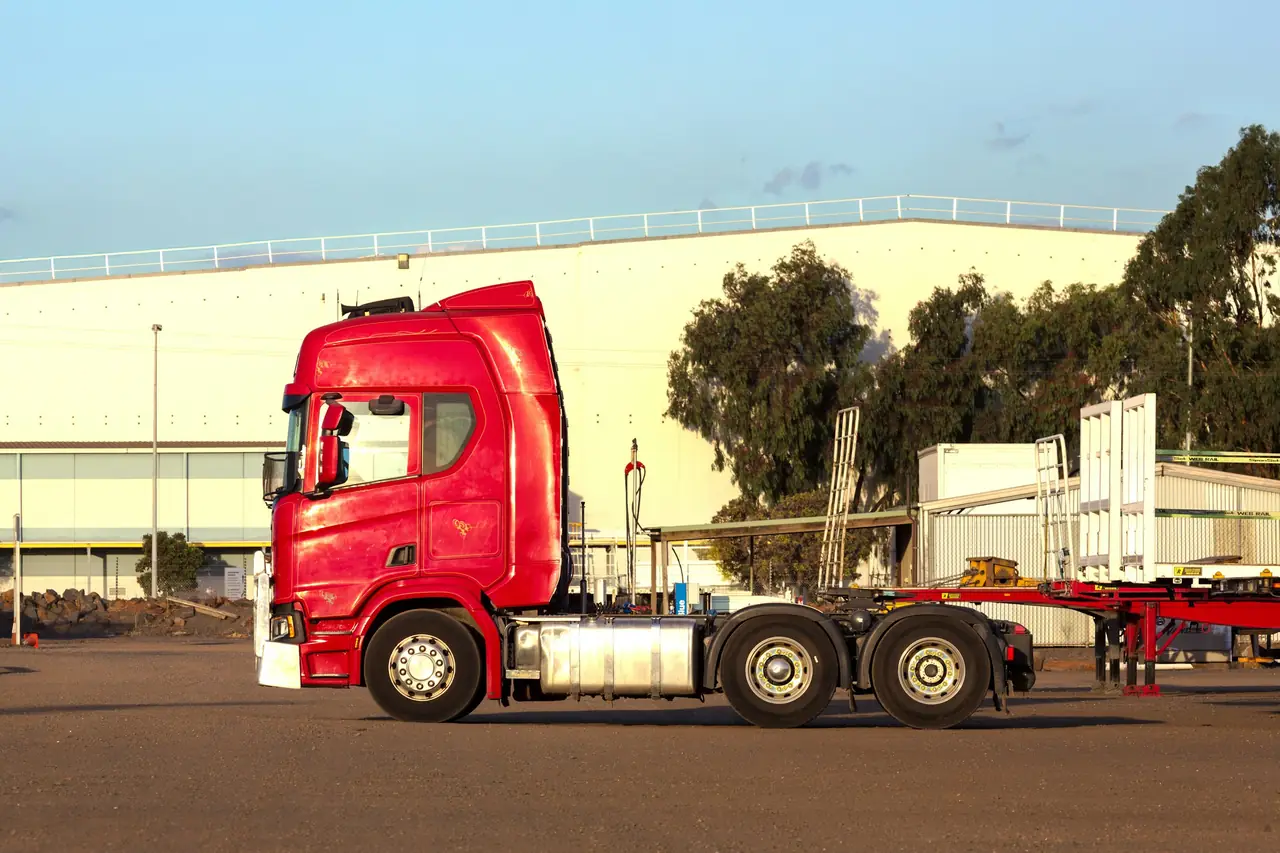
A Class 1 driver drives an articulated lorry: a tractor unit coupled to a semi-trailer. The job starts before the wheels turn, with a walkaround check of the unit and trailer, a look at the coupling, the lights and the tyres, and a check of the paperwork for the load. Then comes the collection, a run planned around driving time, and the delivery, with the load signed for at the other end.
The work is steady and varied. One driver runs a fixed route from a depot each day. Another does spot work and takes a different load each shift. Others work nights on trunk routes between hubs, or go tramping for the week. Whatever the pattern, the driver is responsible for the vehicle, the load and the tacho record while on the road.
Trailers differ, so the job does too. Curtainsiders, box trailers, fridge trailers, flatbeds, tippers, tankers and skeletals for containers all pull on the same licence, with extra tickets for some. A Class 1 driver with ADR, or with fridge or container experience, fits more of the bookings we take.
Licence and tickets
Class 1 is the trade name for category C+E on a UK driving licence. GOV.UK describes category C+E as large vehicles over 3,500 kg with a trailer over 750 kg, which covers articulated lorries and heavy lorry-and-trailer combinations. GOV.UK says you might know towing heavier trailers as HGV 1.
A lorry driver also needs the Driver CPC, which is 35 hours of periodic training every 5 years, recorded on the Driver Qualification Card. A driver whose CPC has lapsed cannot drive a lorry for work.
A digital tachograph driver card goes with the driver from vehicle to vehicle. It is issued to the driver by the DVLA, and the driver puts it into the tachograph at the start of every shift in a vehicle that has one.
Sources: GOV.UK, Driving licence categories; Driver CPC; Digital tachographs (checked 1 October 2026).
Drivers’ hours
Most Class 1 work falls under the main drivers’ hours rules for vehicles over 3.5 tonnes, which GOV.UK calls the assimilated rules. The main limits are 9 hours of driving in a day, which can go up to 10 hours twice a week, 56 hours in a week and 90 hours in any two weeks. A driver takes breaks totalling at least 45 minutes after no more than 4 hours 30 minutes of driving, and 11 hours of rest every day, which can be cut to 9 hours 3 times between weekly rests. The weekly rest is 45 hours, which can be cut to 24 hours every other week.
The tachograph records it all. A driver who passes a limit breaks the rules, so the driver and the planner both watch the clock. We ask about recent hours before we book a driver, because the limits belong to the driver, whichever employer the hours were worked for.
The working time rules add limits for mobile workers under the main rules. Working time averages no more than 48 hours a week over a reference period that is normally 17 weeks, with up to 60 hours in any single week, and no more than 6 consecutive hours without a break. If night work is done, working time must not exceed 10 hours in any 24 hours, and for goods vehicles night time is 00:00 to 04:00.
Sources: GOV.UK, Drivers’ hours rules; Drivers’ hours: working time rules (checked 1 October 2026).
Shifts
- Days
- Collections and deliveries in daylight, home each night. Start times are set by the customer or the depot, and 6am is one example.
- Nights
- Trunk runs between hubs and deliveries to sites that receive overnight. Night work has its own working time limit, set out under drivers’ hours.
- Tramping
- Out for the working week, home at the weekend. Weekly rest is planned before the booking starts.
- Weekends
- Saturday and Sunday shifts for customers who load at the weekend, or to cover a regular driver’s rest day.
Pay basis
Pay is an hourly rate set per booking. It depends on the shift pattern, the work and the client, and nights, tramping and weekends can be rated differently. We do not publish rates on this site.
The National Living Wage is the legal floor for workers aged 21 and over, and no booking pays below the legal minimum wage. You are told the rate before you accept a shift, and Nalon pays you for the hours on your signed timesheet.
Pay is for the hours worked. GOV.UK says an employer cannot pay drivers by the speed of delivery, the distance travelled or the amount of goods carried if that encourages them to break the drivers’ hours rules.
Checks we run
DVLA licence check
We check the C+E entitlement, endorsements and expiry with the DVLA, using the check code you give us.
Driver CPC
We ask to see the Driver Qualification Card and check the training record.
Digi card
We ask to see your tachograph driver card and check that it is in date and in your name.
Right to work and references
Right to work is checked before the first shift, and references cover your recent driving.
Hours awareness
We ask what you have driven in the days before a booking.
The full list of checks is on the compliance checks page.
Questions about Class 1 work
- Does a Class 2 licence let me drive an artic?
No. Category C covers rigid lorries over 3,500 kg with a trailer up to 750 kg. An articulated lorry needs category C+E, which is Class 1.
- Can I register for nights as a new Class 1 driver?
Yes. Some clients ask for a minimum of Class 1 experience for nights and tramping, and we tell you before you are booked so there are no surprises on the first shift.
- Do I need my digi card for every shift?
You carry your own driver card and use it in the tachograph on every shift in a vehicle fitted with one. The card is yours and goes with you from job to job.
- Can I take weekend-only work?
Yes. Tell us the days you can work when you register, and we offer weekend bookings that match.
Book a Class 1 driver
Give us the trailer type, the route or collection point, the start time, the shift pattern and any tickets the job needs. We come back on who can cover it.