Counterbalance forklift driver jobs and cover
Counterbalance forklift drivers load and unload lorries, move pallets across yards and feed warehouse racking on sit-on trucks that carry the load on forks at the front.
The job
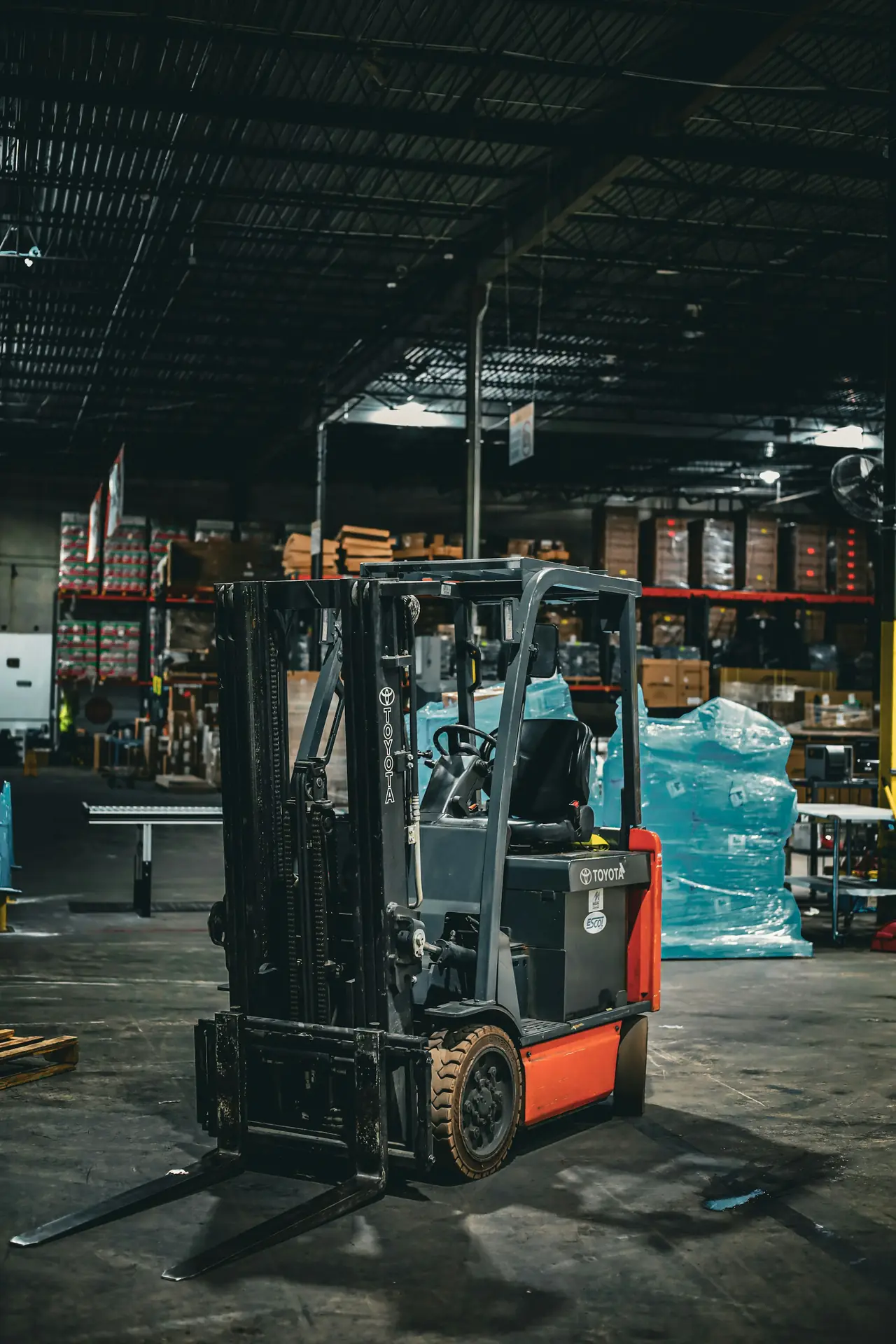
A counterbalance forklift driver moves pallets and other loads on a truck that carries the load on forks at the front and uses its own weight at the back to balance it. The truck works indoors and outdoors, on loading bays, in yards, in goods-in and on factory floors. Most of the day is loading and unloading trailers, stacking and retrieving pallets and feeding the next stage of the flow.
The job is about accuracy and safety. The load can be heavy, tall and awkward, and people are close by. The driver checks the truck at the start of the shift, follows the site’s traffic rules, keeps the forks low when travelling and does not lift a load that is unstable.
Counterbalance trucks run on electricity, diesel or gas, and the sites that use them differ: a steel stockholder, a builders’ merchant, a food factory, a distribution centre. A driver who has worked outdoors in all weather suits yard work. A driver who has worked in a busy warehouse suits goods-in and despatch.
Sectors that use this role
Related roles
Training and certificates
HSE says there is no such thing as a lift-truck licence. What a forklift driver carries is a training certificate from an accredited training provider. HSE says there is no legal requirement for certificates, but providers always issue them and HSE encourages their use as evidence that training has been given.
HSE’s approved code of practice on rider-operated lift trucks, known as L117, sets the minimum standard of basic training. Operator training has three stages: basic training, specific job training and familiarisation training on the site. HSE says a basic course typically takes 3 to 5 days.
The certificate names the truck type. HSE says an operator trained on one type of lift truck cannot safely operate others without conversion training, so a counterbalance certificate does not cover a reach truck.
Training providers do not have to belong to an accrediting body, and HSE says it no longer runs its own accrediting bodies scheme. Bodies such as AITT and ITSSAR set and monitor standards for materials handling training, NPORS runs a registration scheme mapped to L117, and RTITB offers accredited workplace materials handling training standards. We check that the driver’s certificate comes from a provider working to one of these.
Sources: HSE, Lift-truck training and accreditation pages; AITT; ITSSAR; NPORS; RTITB (checked 1 October 2026).
Shifts
- Earlies
- Morning shifts that get lorries unloaded and orders loaded for the day. Start times are set by the site.
- Lates
- Afternoon and evening shifts that receive deliveries and prepare the next day’s loads.
- Nights
- Overnight shifts at sites that run around the clock. The working time rules on night work apply.
- Weekends
- Saturday and Sunday shifts at sites that load and receive through the weekend, and extra cover at peak.
Pay basis
Pay is an hourly rate set per booking. It depends on the truck, the site and the shift, and nights and weekends can be rated differently. We do not publish rates on this site.
The National Living Wage is the legal floor for workers aged 21 and over, and no booking pays below the legal minimum wage. You are told the rate before you accept a shift.
Checks we run
Forklift certificate
We check that the certificate names the truck type and comes from a provider working to a recognised standard, such as AITT, ITSSAR, NPORS or RTITB.
Experience
We ask which trucks you have driven, indoors or outdoors, and on what kinds of load.
Right to work
Checked before the first shift, with a record kept.
References
References cover safe working, attendance and pace.
The full list of checks is on the compliance checks page.
Questions about counterbalance forklift work
- Do I need a forklift licence?
No such licence exists. HSE says there is no such thing as a lift-truck licence. Drivers hold a training certificate for the truck type, and the HSE code of practice sets the minimum standard of basic training.
- Does a counterbalance certificate cover a reach truck?
No. HSE says an operator trained on one type of lift truck cannot safely operate others without conversion training. A reach truck needs its own training or a conversion course.
- How long does a forklift certificate last?
HSE sets no fixed period for refresher training. Employers choose an interval, such as every 3 to 5 years, and monitor their operators. Some registrations carry an expiry date: NPORS registrations, for example, run for 3 or 5 years.
- Can I work outdoors?
Yes, if you want to. Yard work is part of the job at many sites, in all weather. Tell us at registration whether you want indoor work, outdoor work or both.
Book a counterbalance forklift driver
Give us the site, the truck type, the shift pattern and the start date. We come back on who can cover it.