Reach truck driver jobs and cover
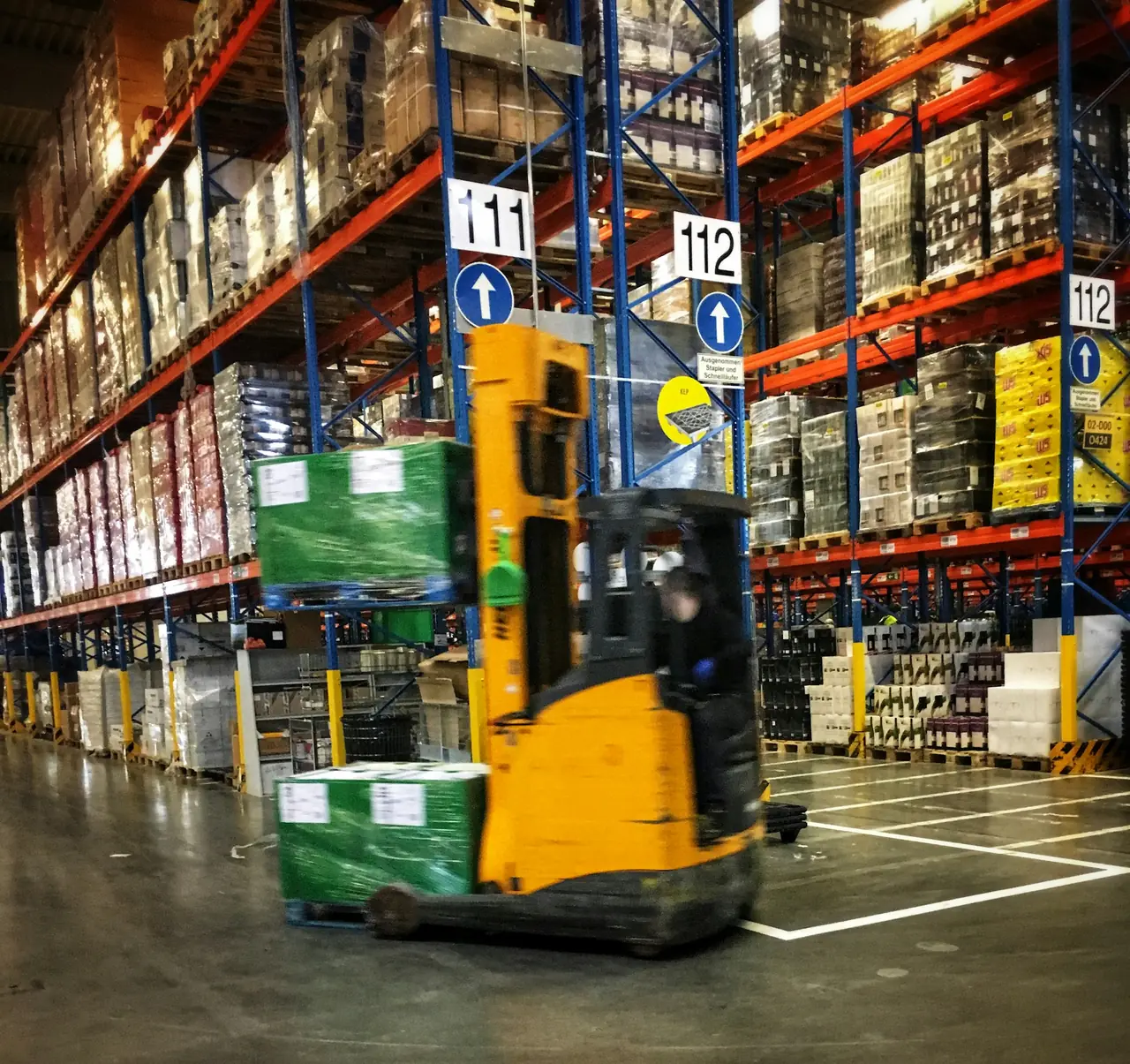
Reach truck drivers put pallets into racking and bring them down in narrow aisles, on trucks where the mast or forks reach forward to the load.
The job
A reach truck driver works in a racked warehouse, putting pallets into the racking and taking them out. The truck is built for narrow aisles. The mast or the forks reach forward to place the pallet in the rack, so the truck itself stays in the aisle, and that lets a warehouse fit more racking in the same floor area.
Most of the work is put-away and picking at height. A scanner tells the driver which pallet to take and where to put it. The driver raises the load, lines it up with the beam, sets it down and checks that it sits square. At height a small error matters, so accuracy comes before pace.
The work is pressured but steady. A reach truck driver on a busy pick face handles pallet after pallet, and the site measures accuracy and damage as well as rate. Drivers who stay calm in the aisle, keep the truck under control and look after the racking are the ones sites ask to keep.
Sectors that use this role
Related roles
Training and certificates
A reach truck driver needs a training certificate for reach trucks. HSE says an operator trained on one type of lift truck cannot safely operate others without conversion training, so a counterbalance certificate does not cover a reach truck.
HSE says there is no such thing as a lift-truck licence, and no legal requirement for certificates. Accredited providers always issue them, and HSE encourages their use as evidence that training has been given. ITSSAR lists reach and straddle trucks as a separate category from counterbalance trucks, and NPORS lists reach truck among its lift truck categories.
Operator training has three stages: basic training, specific job training and familiarisation training on the site. A site that runs very narrow aisles or special attachments may add its own familiarisation before the first shift.
Sources: HSE, Lift-truck training pages; ITSSAR; NPORS (checked 1 October 2026).
Shifts
- Earlies
- Morning shifts that put stock away and pick the day’s orders. Start times are set by the site.
- Lates
- Afternoon and evening shifts that replenish pick faces and prepare the next day’s orders.
- Nights
- Overnight shifts at sites that run around the clock. The working time rules on night work apply.
- Weekends
- Saturday and Sunday shifts at sites that pick and despatch through the weekend, and extra cover at peak.
Pay basis
Pay is an hourly rate set per booking. It depends on the site, the aisle type and the shift, and nights and weekends can be rated differently. We do not publish rates on this site.
The National Living Wage is the legal floor for workers aged 21 and over, and no booking pays below the legal minimum wage. You are told the rate before you accept a shift.
Checks we run
Reach truck certificate
We check that the certificate names reach trucks and comes from a provider working to a recognised standard.
Experience
We ask how high you have worked, in what kind of racking, and on which make of truck.
Right to work
Checked before the first shift, with a record kept.
References
References cover accuracy, attendance and safe working.
The full list of checks is on the compliance checks page.
Questions about reach truck work
- Can I drive a reach truck on a counterbalance certificate?
No. HSE says an operator trained on one type of lift truck cannot safely operate others without conversion training. Reach trucks need their own certificate or a conversion course.
- What is the difference between a counterbalance and a reach truck?
A counterbalance truck carries the load on forks at the front and balances it with the weight of the truck behind. A reach truck works in narrow aisles, where the mast or forks reach forward to the load so the truck stays in the aisle.
- Is there a licence for reach trucks?
No. HSE says there is no such thing as a lift-truck licence. Drivers hold a training certificate for the truck type from an accredited provider.
- Do I need a scanner or handheld experience?
Most racked sites direct picking by handheld scanner or headset. Experience helps, and the site trains you on its own system at induction.
Book a reach truck driver
Give us the site, the aisle type if you know it, the shift pattern and the start date. We come back on who can cover it.